
OUR APPROACH
Form denotes function.
Biology can only do what its structure permits. We build the structure, then measure what it does.
WHAT WE MEASURE
We read electrical activity from human neuronal networks.
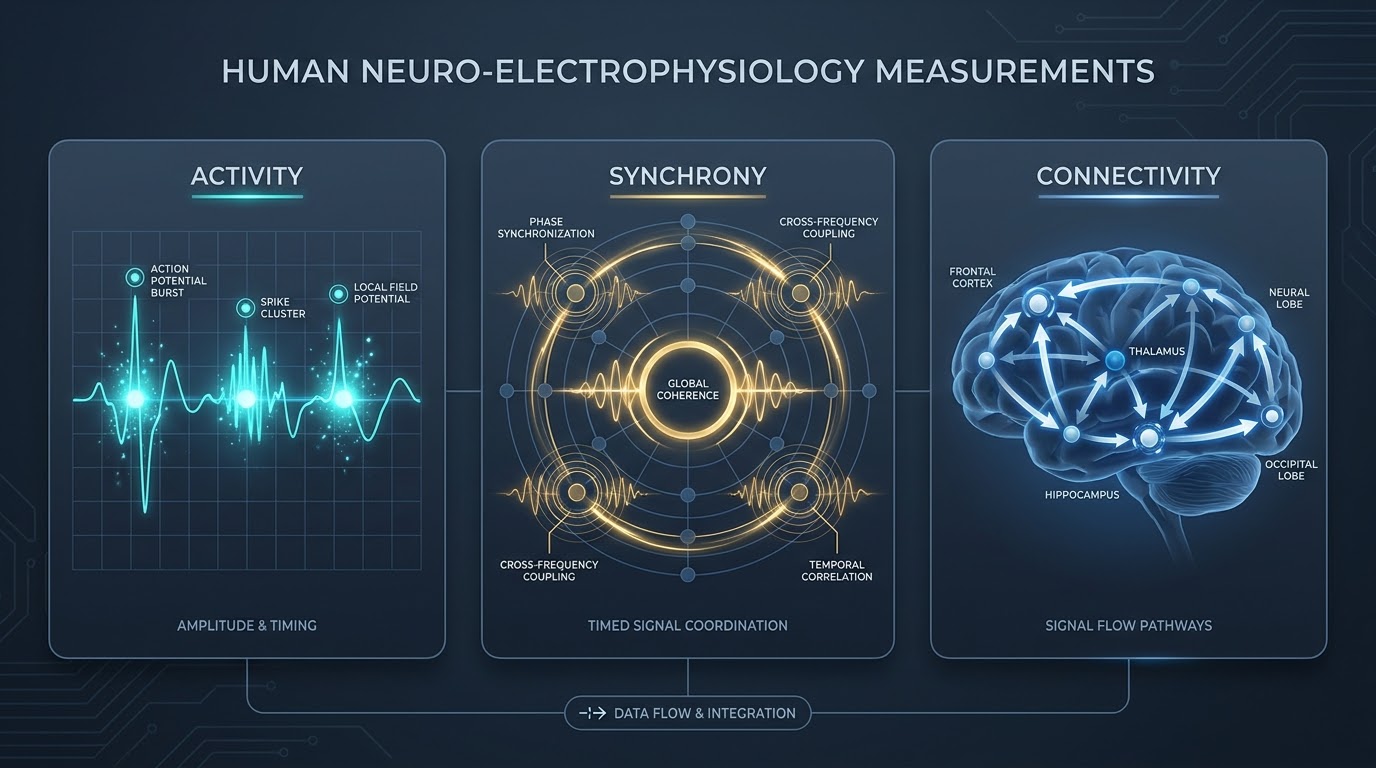
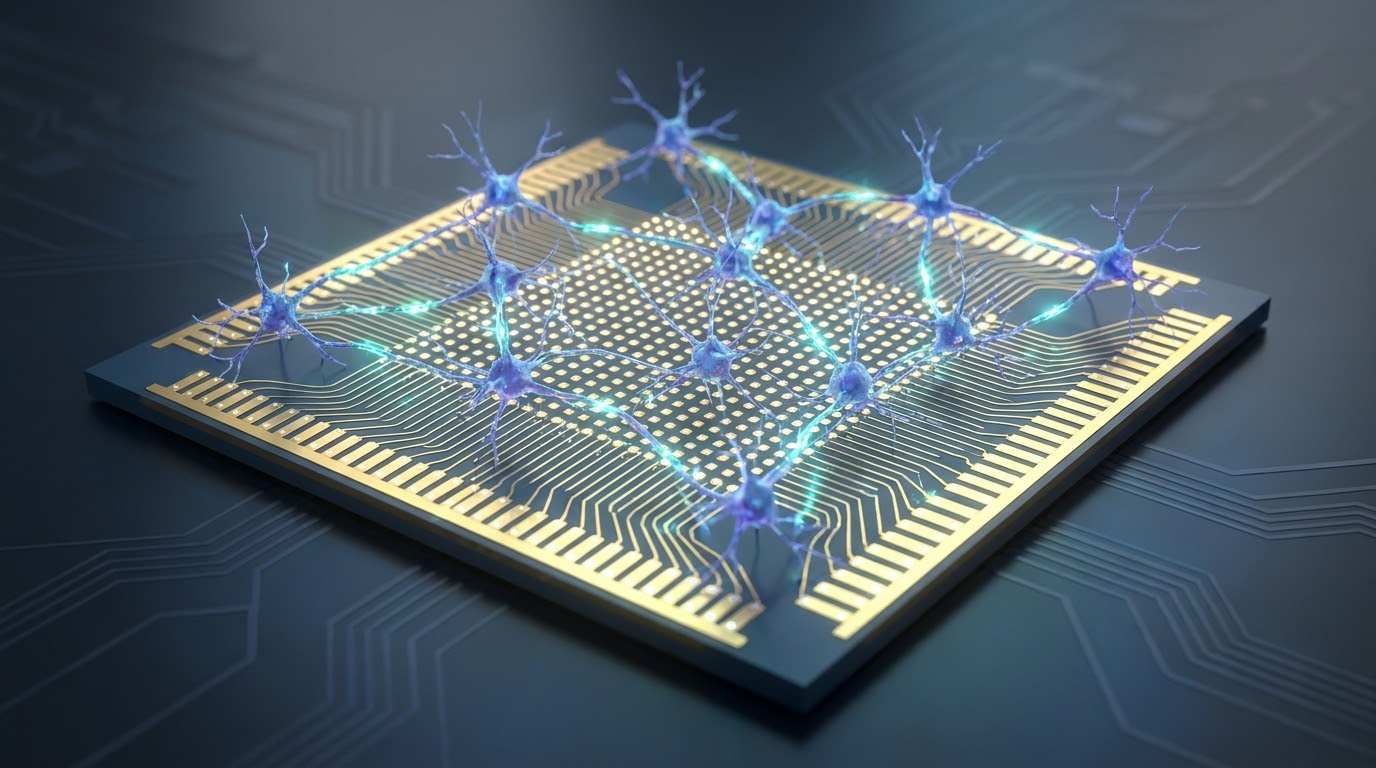
Using high-density microelectrode arrays, we capture three families of readout.
Activity & burst structure
How often cells fire, and whether that firing organizes into bursts.
Network synchrony
The timing relationships between cells that define a functional circuit.
Connectivity
Which parts of the network are coupled, how strongly, and in what direction.
None of this is exotic. These are the same measures clinical electrophysiology already uses to characterize brain function — the same language, applied earlier, in human cells, before a therapy reaches a patient.
Structure is the precondition. Function is the evidence.
A neuronal network can only produce the behaviour its organization allows. Without the right architecture, the cells are alive and the recordings are clean and the result means nothing — the system was never capable of the function being asked about.
This is not an argument for maximum complexity. More structure is not automatically more truth. Past the point of sufficiency, added complexity introduces variance rather than resolution, and the answer gets harder to read, not easier.
What matters is the minimum organization required for the question in front of you. Build to that, then measure. The measurement is the evidence — the architecture is what makes the measurement mean something.
ONE ARCHITECTURE, MANY INDICATIONS
The same circuits sit beneath many diagnoses.
Neuropsychiatric conditions are drawn as separate boxes, but they do not behave that way underneath. Their genetics, their circuit dysfunction, and their pharmacology overlap heavily — shared architecture linking disorders that clinical labels keep apart.
That overlap is the opportunity. A readout that captures how a human circuit actually behaves is not a single-indication assay. The same measurement speaks to a family of conditions that share the same broken machinery.
Human first. Before the clinic, not after.
Evidence from living human neural circuits, measured functionally, before a single patient is enrolled — that is the standard everything we build answers to.
Partner with us